Enclave
Enclave runs Datum and Steward inside closed networks and on premises. Updates arrive as signed offline bundles, models run locally, and no telemetry leaves.
- Status
- Built
- Runs
- Closed networks, on-prem racks
- Inputs
- Update bundles, carried in on controlled media
- Outputs
- Nothing leaves unless the customer sends it
In a fab or a shipyard design office, the network boundary is a rule, and software has to work inside it. Enclave is how Datumata software runs there, with the customer deciding what crosses the boundary.
Capabilities
- 01InstallRuns on the customer's own servers inside a closed network. It depends on no outside service at runtime.
- 02UpdateReleases arrive as offline bundles. The customer checks each one against a key they hold, reads the change list and installs on their own schedule.
- 03ModelsLanguage and vision models run on hardware inside the boundary. Documents and prompts are never sent to an outside model provider.
- 04ResidencyKorean data stays in Korea. Storage location, read access and deletion are the customer's settings, and every change to them is journaled.
What Enclave does
- Network
- Closed
- Telemetry
- None
- Update path
- Offline bundle, verified on site
Korean fabs, yards and plants keep their engineering data behind closed networks. Their drawings describe processes that took decades to develop. Software that needs an internet connection cannot run there.
Enclave packages Datum, Steward and the models they use into one system that installs and runs inside the boundary. It needs no call-home licence check, no outside model endpoint and no remote support tunnel. Datumata engineers install it on site, alongside the customer's IT and security teams.
Updates travel the way the customer's other controlled media travel. Datumata builds a bundle, signs it and hands it over. The customer's team verifies the signature against a key they hold, reads the change list, and installs when their change window allows. If verification fails, nothing is installed.
Inside the boundary, Enclave keeps its own audit trail of every access, export and change. The customer's security team reads it with the same tools they use for the rest of the network.
Data stays where the customer puts it
Questions about where data lives are usually answered with a vendor policy. In Enclave they are answered by the customer's settings. Storage location, retention, who may read which project and what may be exported are configured by the customer and journaled whenever they change.
Datumata does not hold copies of customer documents. When its engineers need to look at a problem, they do so on site, inside the network, under the customer's access rules.
- No copies held by Datumata
- Retention and deletion set by the customer
- Every export logged with the person who made it
How an update crosses the boundary
- 0.1Build
Datumata builds the release from reviewed source into a single bundle, with the models and dependencies it needs, and writes the change list in plain language: what changed, why, and which parts of the system it touches. Nothing is fetched at install time.
- 0.2Carry in
The bundle enters through the customer's controlled-media process. Datumata engineers follow the same gate rules as everyone else on site.
- 0.3Verify
The customer's team checks the bundle against the key they hold. A failed check stops the install before anything changes.
- 0.4Install
The customer installs in their own change window. The previous version stays in place, so rolling back is a single step.
Deployment options
| Option | Where it runs | Network | Updates |
|---|---|---|---|
| Closed network | Customer servers in the plant or data centre | No outside connection | Offline bundles, carried in |
| On premises, connected | Customer servers | Outbound blocked by default; the customer opens only what they choose | Bundles, offline or over a customer-approved channel |
What Enclave will not do
- Unsigned code
- Never installed
- Security approval
- The customer's
Enclave will not phone home. It sends no usage reports, crash uploads or licence beacons. A log reaches Datumata only if the customer exports and sends it, and that export is journaled.
It will not install unsigned code, including Datumata's own hotfixes. An urgent fix goes through the same signing and verification as any release.
It will not replace the customer's security review. Enclave arrives with its architecture, its data flows and a software bill of materials (SBOM) for every component, written for the customer's security team to approve or reject. Approval is theirs to give.
Security and IT specification
Q01Does Enclave operate with no internet connection?
Yes. That is the case it was built for first. Installation, operation, models and updates all work without any outside connection.
Q02What hardware does Enclave require?
It depends on document volume and the models in use. The specification is written against the actual workload before installation.
Q03Who at Datumata can see customer data?
By default, no one. Datumata holds no copies. Its engineers see data only on site, inside the customer's network, through accounts the customer's administrators create and can disable.
Q04How are updates verified?
The customer holds the verification key and checks every bundle against it before installing.
The change list states what changed in each component, and the previous version is kept for rollback.
Q05Can a foreign authority reach customer data through Datumata?
On the customer's own servers, the data sits under the customer's control and jurisdiction, and Datumata holds no copy to hand over.
Q06Can the customer's security team audit Enclave directly?
Yes. The architecture, data flows, component list and change lists are written for the customer's security team. The audit log inside Enclave records every access and every export.
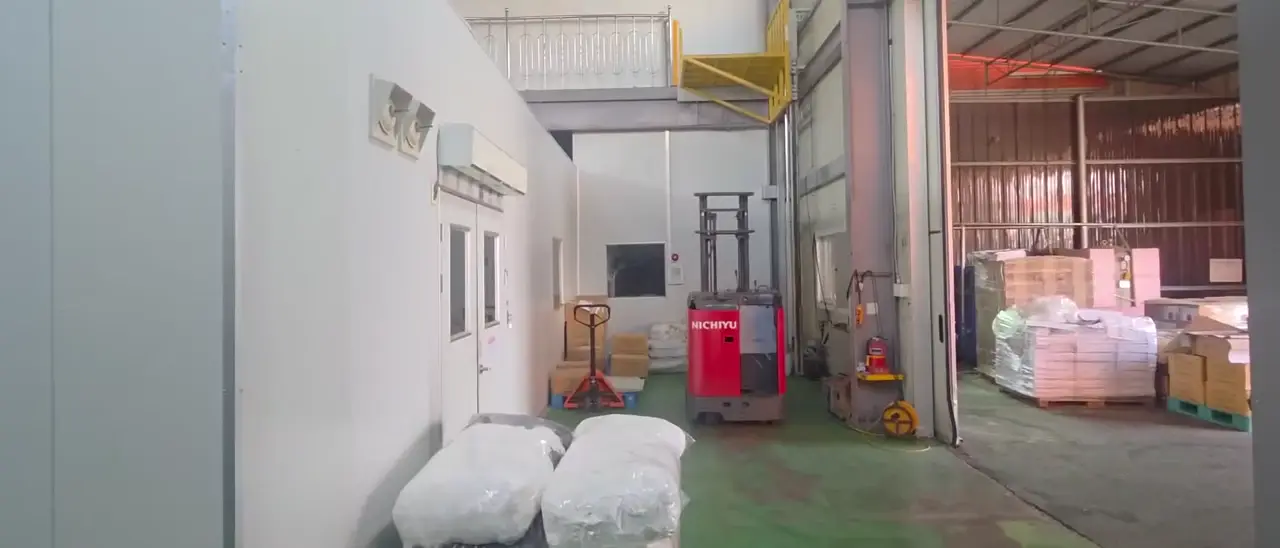
In a cleanroom, the network ends at the wall.
Footage: FACTORYTV · CC BY 3.0